12 Jul 2026
Verification Processes and Their Role in Fluid Game Transitions at Online Casinos
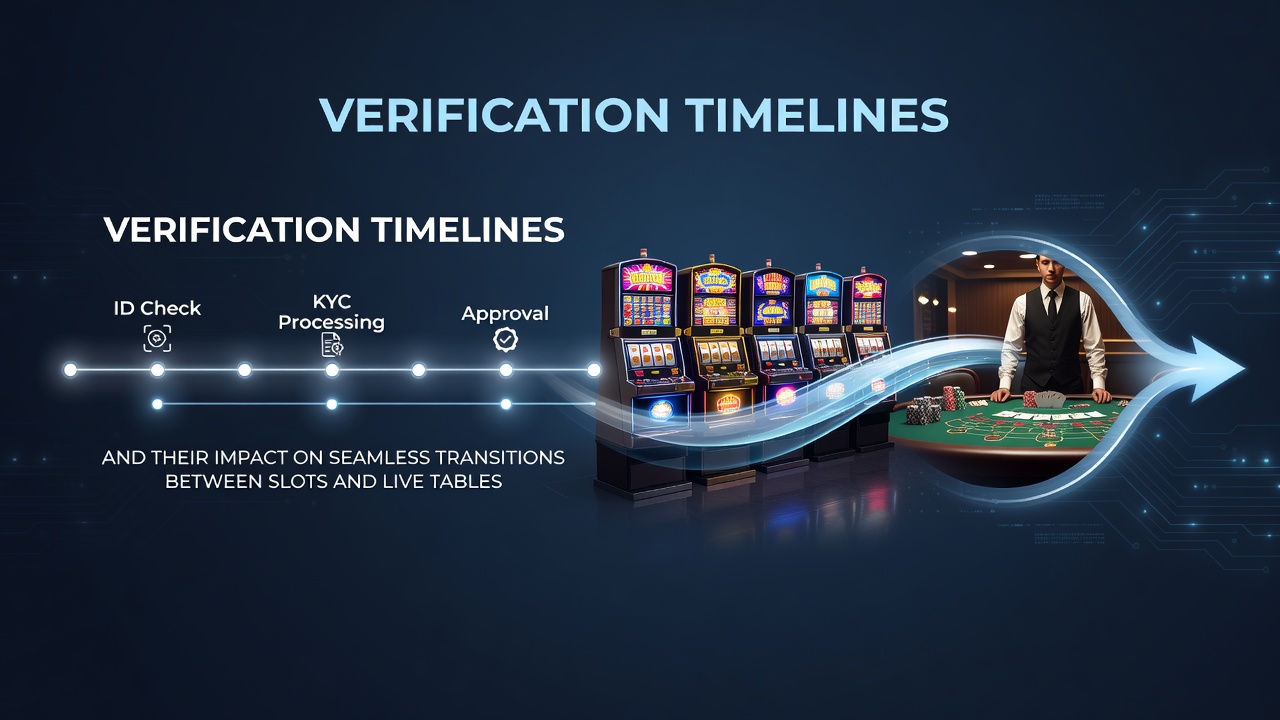
Online casinos rely on structured verification procedures to confirm player identity, age, and payment details before allowing full access to games, and these steps directly shape how smoothly users move between slots and live tables. Verification timelines refer to the duration required for identity checks, document uploads, and approval processes that operators complete, often involving third-party services or automated systems that cross-reference data against official records. When these processes extend beyond a few minutes, players encounter interruptions that break the flow from quick spin sessions to interactive live dealer environments where real-time engagement demands uninterrupted access.
Operators implement tiered verification levels that scale with activity, beginning with basic email confirmation for initial deposits and advancing to full know-your-customer protocols once players reach certain thresholds. Slots typically require minimal upfront checks since they operate on automated reels with instant outcomes, yet switching to live tables often triggers additional layers such as address verification or source-of-funds reviews. Data from industry reports indicate that average verification completion times range from under 30 seconds for automated approvals to several hours when manual reviews become necessary, particularly during peak periods or when documentation contains discrepancies.
Core Components of Verification Timelines
Identity verification forms the foundation and includes submission of government-issued identification alongside proof of address documents like utility bills or bank statements. Automated systems scan these files using optical character recognition and biometric matching where available, while manual teams handle edge cases that algorithms flag for inconsistencies. Payment verification runs parallel and confirms that deposit methods align with registered details, reducing risks associated with mismatched accounts. Observers note that platforms integrating real-time banking APIs often shorten these steps because transaction records feed directly into verification workflows without requiring separate uploads.
Live table access frequently demands elevated checks because dealers and platforms must comply with stricter jurisdictional rules on player location and interaction monitoring. Slots allow immediate play once basic registration clears, yet live environments may pause sessions until secondary approvals finalize. Research indicates that this disparity creates measurable differences in session continuity, with players reporting higher completion rates for slot-only experiences compared to mixed gameplay that crosses into live formats.
Effects on Player Movement Between Game Types
Seamless transitions depend on preemptive verification that anticipates player intent to switch formats. Casinos that pre-verify accounts during initial registration enable quicker shifts because most required data already sits in system records. When verification occurs reactively at the moment of transition, delays accumulate and users abandon live tables in favor of remaining in slots where no further checks interrupt play. Figures from gaming analytics platforms reveal that transition friction rises sharply after the first five minutes of pending verification, correlating with measurable drops in live table engagement metrics.
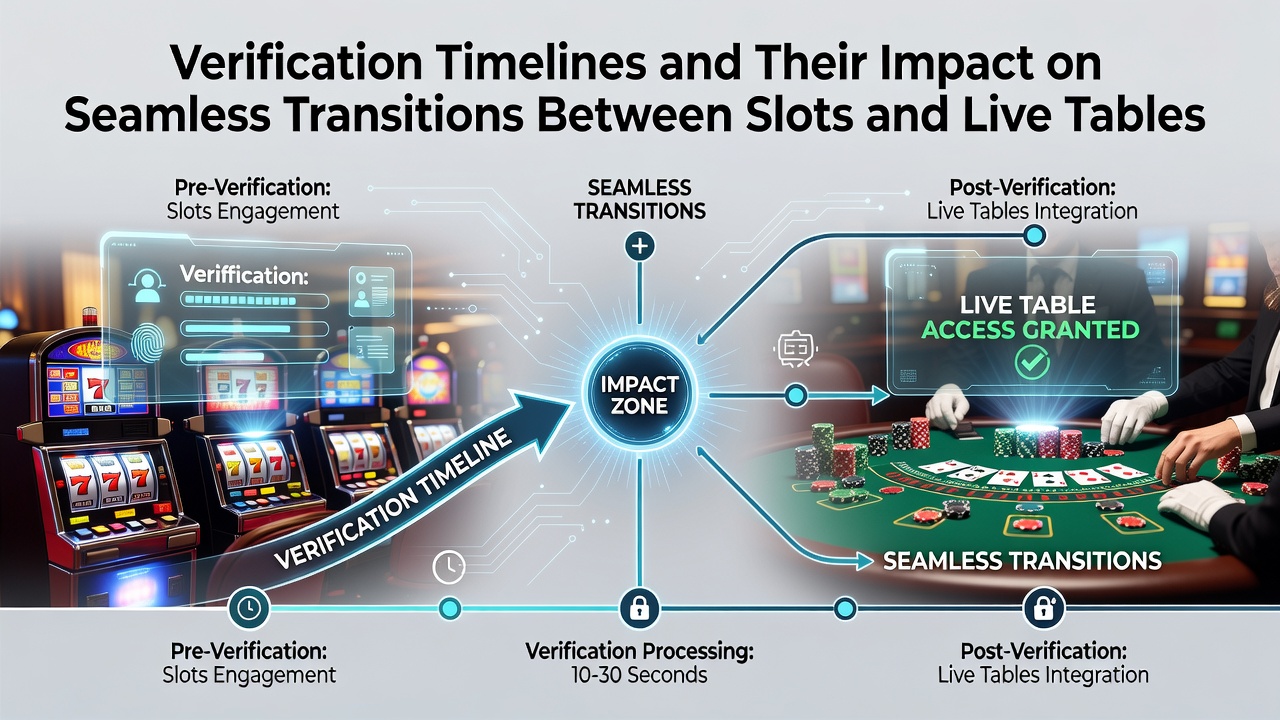
July 2026 marks the scheduled rollout of updated technical standards across several regulated markets that require enhanced real-time verification for live dealer products. These standards emphasize faster data-sharing protocols between operators and regulatory databases, aiming to compress approval windows without compromising security protocols. Early testing in pilot programs shows that integrated verification pipelines can reduce average transition times by up to 40 percent when compared against legacy manual systems. Yet platforms still face challenges when players use international payment methods or submit documents from regions with slower record-retrieval infrastructure.
Technological Approaches Reducing Friction
Many operators now deploy machine learning models that predict verification needs based on player behavior patterns and pre-load checks accordingly. These systems monitor deposit velocity and game preferences to flag accounts likely to attempt live table access, triggering background verifications before the switch occurs. Electronic wallet providers contribute by embedding verification layers at the funding stage, which then carry over to casino platforms and eliminate redundant steps. According to a study published by the University of Nevada's International Gaming Institute, casinos utilizing predictive verification experienced fewer session abandonments during format changes than those relying on sequential checks.
Biometric options such as facial recognition and fingerprint scanning accelerate identity confirmation on mobile devices, allowing players to complete verifications in seconds rather than minutes. These methods integrate with existing app frameworks and reduce document upload requirements. Industry organizations including the European Gaming and Betting Association have documented how standardized biometric frameworks across operators improve interoperability and shorten cross-platform verification windows. Players benefit because a single verified profile travels between slots and live tables without repeated prompts.
Regulatory Variations Across Jurisdictions
Different regions impose distinct verification timelines that influence how operators structure their platforms. Markets emphasizing rapid approvals tend to see higher volumes of mixed gameplay, whereas stricter regimes with extended manual review periods report more segmented player behavior that favors single-format sessions. Operators adapt by maintaining separate verification queues for high-priority live table requests, allocating dedicated staff during evening hours when transitions peak. Data compiled by the Nevada Gaming Control Board highlights regional differences in approval speeds, showing that automated-heavy systems consistently outperform hybrid models in maintaining continuous play across game categories.
Payment verification remains a consistent bottleneck because banking partners apply their own compliance layers that sometimes extend beyond casino-controlled processes. E-wallet services mitigate this by pre-verifying users at the account creation stage, transferring that status to connected casino platforms. Those who've examined transaction logs across multiple operators find that pre-linked payment methods correlate with faster live table entries compared to card or bank transfer routes that require fresh checks.
Conclusion
Verification timelines continue to determine how fluidly players navigate between slots and live tables, with shorter processes supporting uninterrupted sessions and longer ones creating natural breakpoints that segment gameplay. Technological advancements in automation, biometrics, and predictive modeling steadily compress these windows, while regulatory updates scheduled for July 2026 push further refinements in real-time data exchange. Operators that align verification architecture with player movement patterns achieve higher continuity rates across formats, demonstrating that efficient timelines serve both compliance requirements and operational flow.